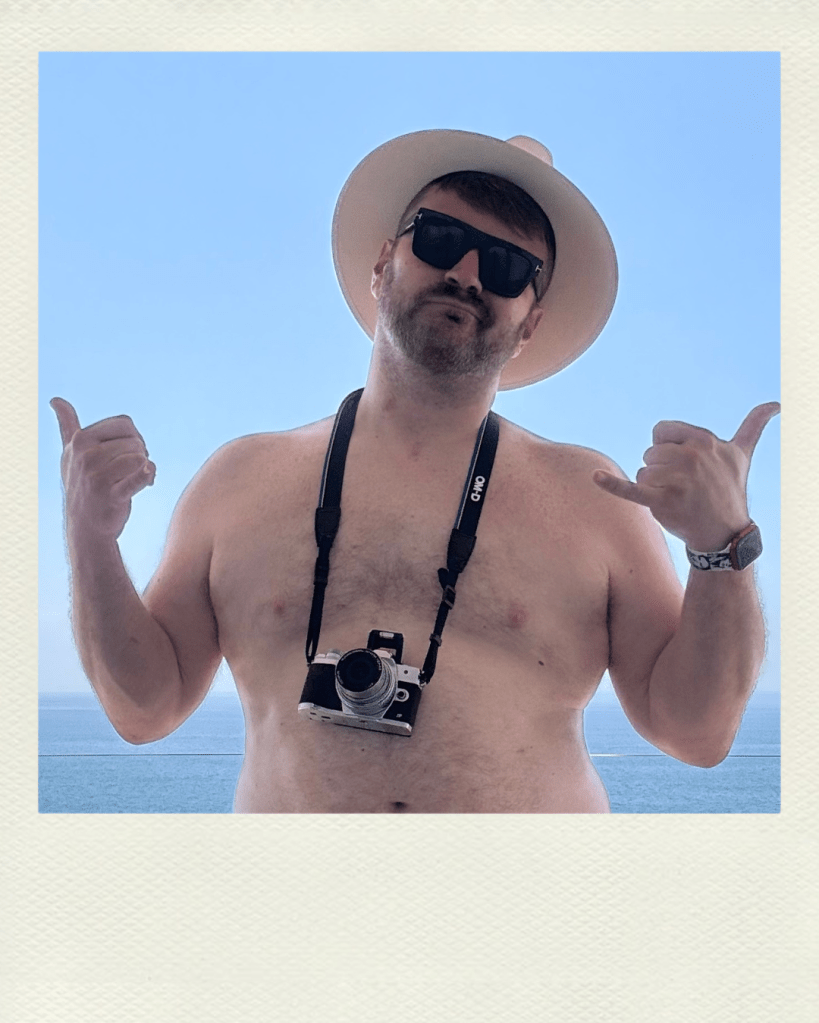
• I scored a ticket to meet Lisa Rinna, and now I’m spiraling—should I be the calm, bookshelf‑respecting fan or abandon decorum and go full Rinna—statement jacket, bigger personality, and the kind of clap that clears a room?
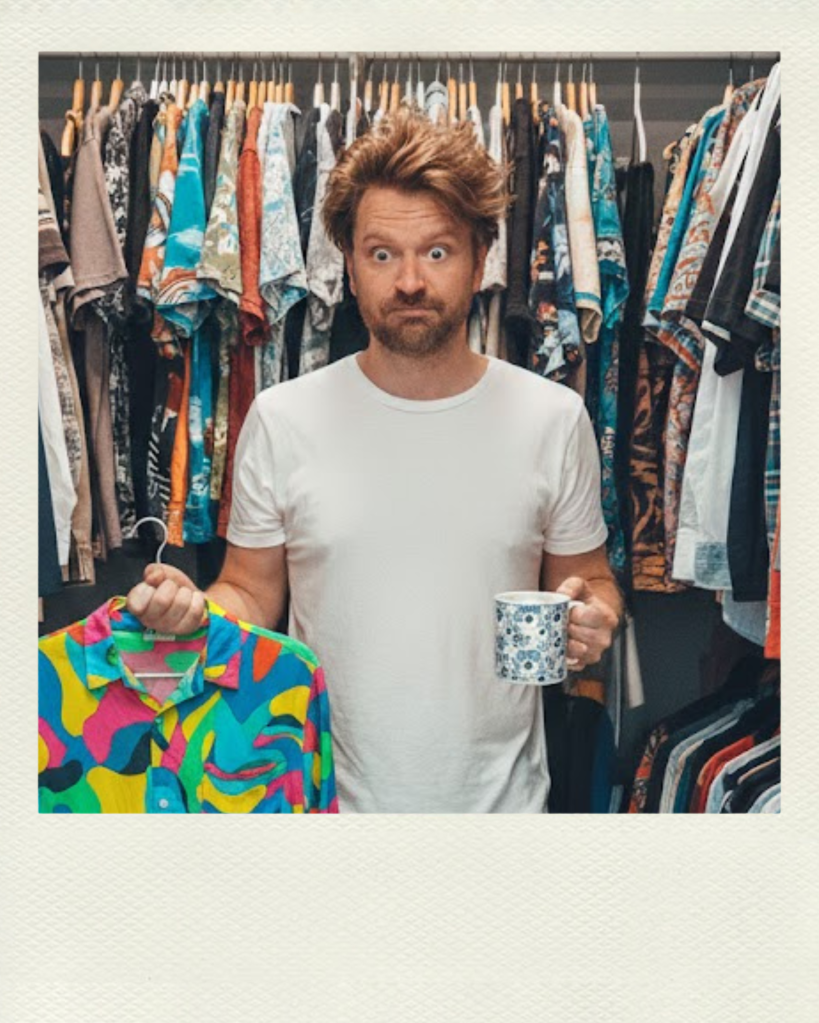
    Getting Bravo-Ready:
    I’m in full pre-meet panic mode—over the next couple weeks, I’ll be pacing between my closet and the mirror, testing outfits like a contestant on a very anxious runway.

    My brain keeps cycling between “wear something classy and ironically understated so she thinks I’m chic” and “wear a T-shirt that says “My advice to you: Don’t hustle the hustler” or “I don’t have to buy it, ’cause I already own it” with a Rinna meme and iconic smirk because authenticity is the hill I will die on.

    Over the next couple of weeks, I’ll be rehearsing opening lines in front of the mirror, likely hate all of them, and toss them because Lisa and I share a delightful talent for refusing to stick to the script—Bravo applause optional, Traitors’ poker face guaranteed.

    A Rinna‑Sized Closet Debate:
    I’m torn; seriously, I’m likely the most indecisive person when it comes to committing confidently to an ensemble. Here’s what I’ve got… thus far:

    Option A: I opt for a classy look — black Louboutins, a sleek jacket, and the kind of polished energy that shows I respect her time, the bookstore, and the sanctity of hardcover books (which I totally do).

    Option B: I procure myself a Lisa Rinna tee featuring one of her patented eyebrow raises and a caption like “Why Am I Here? I’m More Fabulous Than This.” 

    Option C: Or the chaotic combo — a graphic tee (likely a Rinna meme) under a sharp jacket, slim dark denim, and the kind of aggressively affectionate energy that says I can’t decide between suave and ready to hug someone I just met.

    All these say different things about me, and I suspect Lisa would appreciate the indecision.

    Bravo Binge:
    Preparing like I’m the one on WWHL, I’ve been binge-rewatching classic Rinna moments: that perfectly timed clap on Housewives, the “shocked but not surprised” face, and her Traitors poker-face reveals. I’ve bookmarked soundbites, practiced my laugh, and even rehearsed a few compliments that sound less like a high school essay and more like an emotionally precise slay. My playlist for the drive is queued: Rinna-era bravado mixed with Bravo theme music, because mood matters. I’ve got mental timestamps ready to drop—“remember when you did the…?”—so if there’s a tiny lull, I can lob a shared TV memory and hope we both sparkle.

    Say It Loud, Regret It Later:
    If I get thirty seconds, do I go for the bold vulnerable move—“you taught me to own my dramatic moments”—or the safe compliment—“I loved your chapter about…”? Do I ask the thing that will make her laugh or the thing that will make her stop mid-chew? And what if she hugs me, or worse, gives me the classic Rinna eyebrow and walks on? I’ve rehearsed escape routes, emergency tiny talk, and a plan to hand her the book with zero small talk if words desert me. Also plotting a one-liner in case she says, “Who are you?”—“A devoted fan who treats your clips like sermon and has memorized your arsenal of clapbacks for a later date”.

    Favorite Rinna Moments to Drop:
    There are moments I’m ready to lean into for maximum shared delight: her perfectly timed claps that say “I see you, and I judge you gently”. I want to tell her how her poker‑face moments on Traitors taught me that a look can say so much more than a paragraph, the reveal when she held that poker face like a national treasure, or the time she turned a shady comment into a full‑on theatrical monologue and made it couture. Those beats are shorthand for “we both watch Bravo, and we both know how to make an entrance.” I’ve watched Lisa turn a single eyebrow or sigh into a whole mood, and her Traitor’s poker face taught me that a look can say more than a paragraph.

    Permission Slip to Be Loud:
    Lisa continues to make me laugh out loud with those perfectly timed zingers and theatrical hand flourishes, and she’s taught me—by example—how to own my loud, blunt, unapologetic self. That permission to show up big and unashamed. That’s a real lesson I carry with me, and honestly, the clapbacks run my highlight reel, because that blunt honesty is exactly the kind of permission slip I need in my life.

    This is the main‑chapter‑me energy meets fanboy energy, the version of me that delights in theatricality and also cries at a really thoughtful gesture. Rinna gives me permission to be loud—she reminds me that volume can be a kind of honesty, that dramatic flourishes are sometimes the only way to say what’s true. I want to show up as someone who gets her, who understands why her boldness feels like a permission slip for the rest of us to stop apologizing for being ourselves.

    The Rinna Edit: Choosing a Look That Says “I’m Owning It”:
    So tell me—what should I say, ask, or do if I get thirty seconds (or more) with Lisa? I want to be respectful, but also channel my Rinna energy (her lips were made for talking and that’s exactly what they’ll do), and honestly, the title of her book practically dared me to speak up. Also, low‑key praying Erika Jayne shows up so I can lose my mind in person — after all, they’re my top Housewives duo. Vote on my line to use, and I’ll report back with receipts (and a possibly shaky selfie).
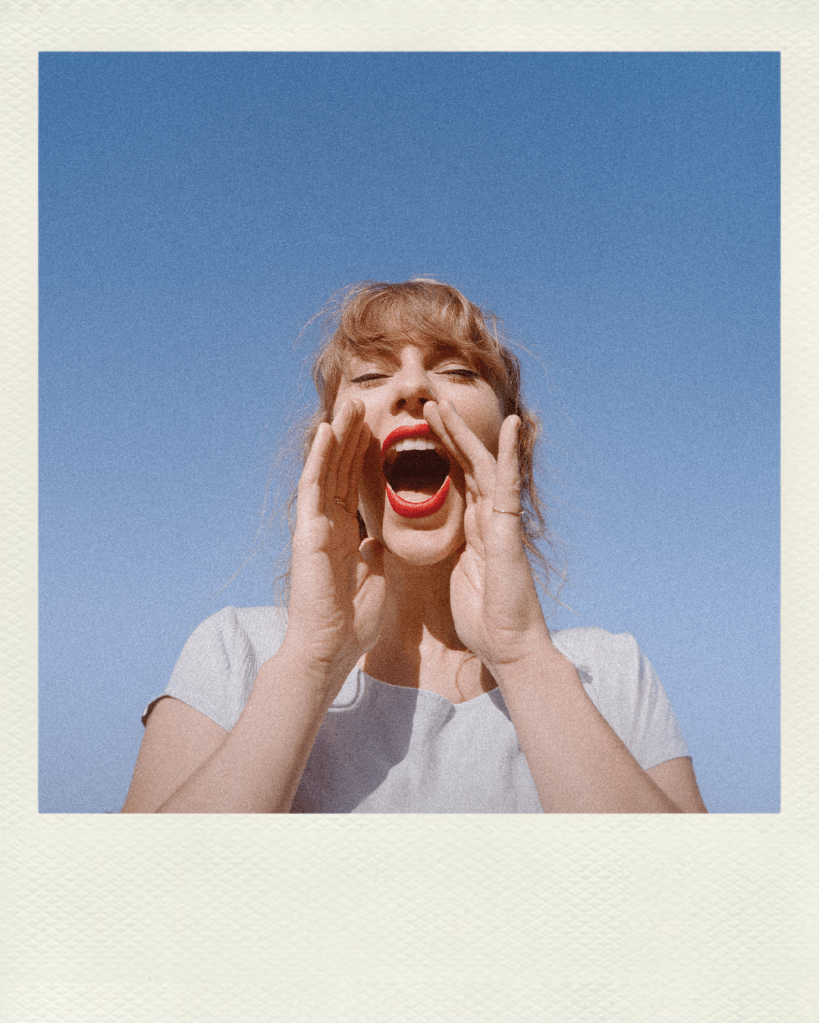
  • “Taylor taught me how to say my name louder.”

    Kindergarten me thought school was a magic trick; grown‑up me thought teaching was the same trick reversed. Somewhere between those two pictures I found Taylor Swift on a mixtape and then on a baby blue CD and then on every playlist that kept me from dissolving the night I told my family I was gay. Her songs showed up like a friend who knew exactly what to say—wordy, precise, dramatic, and somehow kind—so I learned to use her language when my own felt too small.

    Lyrics As Maps:
    Taylor’s lines give you directions when the path feels invisible. Her songwriting reads like a mapmaker’s notebook, giving you street names for feeling—“the story of us,” “cardigan,” “the lakes”—so when I was fumbling through coming out and career shifts, I could point to a lyric and know I wasn’t inventing my experience. That specificity matters. In “You Need to Calm Down” she names the target and then folds the chorus into a collective who‑we‑are, and in quieter songs like “Illicit Affairs” or “Exile” she renders the ache in a way that makes it possible to name yours. When you don’t have a vocabulary for what’s happening to you, a Taylor line will hand it to you in full, dramatic sentences.

    Community and Visibility:
    Swifties are a messy, loving newsroom. Being a Swiftie isn’t just stan culture, it’s crowd therapy. The fan base has been one of the safest rooms I’ve ever entered—people sharing stories about coming out at concerts, sending fans art that reads like confessions, and turning lyrics into little queer anthems. Taylor’s public moves—calling out homophobia, supporting the Equality Act, and making “You Need to Calm Down” a literal call for visibility—gave the fandom permission to be loud. That visibility matters in real life: when I saw trans and gay fans at shows holding signs that said, “We make it to the bridge together,” it was less about celebrity and more about being counted.

    Activism and Donation:
    When the pop star becomes a literal ally… It’s one thing to sing about inclusion and another to write checks and sign letters. Swift’s donations to organizations like GLAAD and the Trevor Project, plus her vocal support for legal protections, moves her beyond symbolic solidarity. For people who didn’t have a big community safety net, those actions were tangible. They meant resources, hotlines, and a megaphone pointed at systems that make life harder for queer people. For me, knowing a major artist used her platform that way lowered the background noise of shame and isolation just a few decibels, which in a dark season felt like life support.

    Why this Matters to Me:
    Taylor’s songs were scaffolding while I rebuilt myself… as I continue to. They help me narrate who I am during shifts big and small—leaving a job, rewriting a family story, or finally saying the word out loud. Beyond the celebrity gloss, her work gives me language to call out cruelty and a chorus to sing back when I feel unseen. That’s why I can be sentimental but still roll my eyes at her industry theatrics—she’s given me something more useful than a headline. She’s handed me a way to speak.

    Sing Loudly and Bring Someone with You:
    If a line struck you the way it struck me, post it. Make a playlist for someone who’s having a hard week. If you’re a Swiftie, share a moment where a song got you through something—tag it #BlankSpacesAndPolaroids or just send it to one person who needs to hear it. If you’re new to her music, try a deep cut on a slow afternoon and see what names it gives you. 

    Either way, don’t keep the good lines to yourself—pass them on.

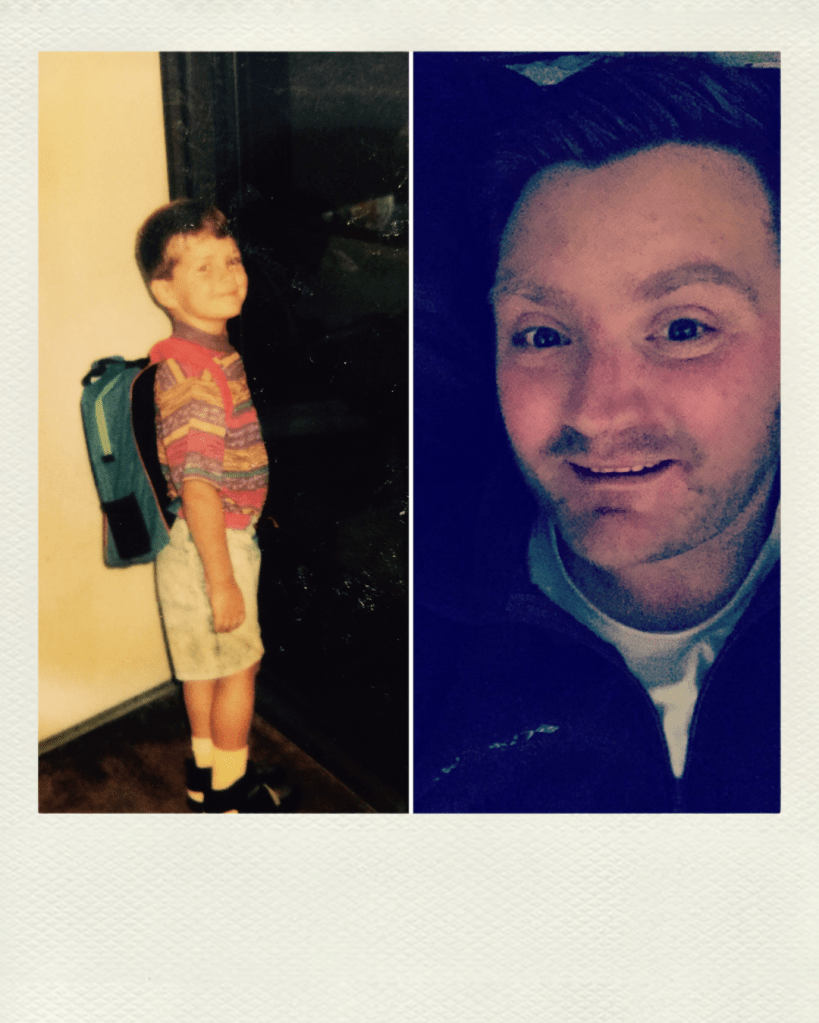
  • I have two “first day” pictures of school saved on my phone—one with a teal backpack and a forever‑wide nervous smile, the other with a stack of essays and the same crooked grin.

    Left: me, Kindergarten, 1991, proud owner of a teal backpack and socks that did not match the shoes. Right: me on my first day teaching twelfth‑grade English at North Brunswick High, same smile, upgraded existential crisis.

    I remember Miss Pamela Jackson’s classroom like it was lit from within—posters, crayon dust, the hum of chatter that made everything feel important. I was five, convinced a backpack could contain my whole future, and absolutely certain that school was where I belonged. Fast forward to North Brunswick, and the fluorescent lights hum a different song. My lesson plans were neat, my shirt probably wrinkled, and I rehearsed the opening line to my seniors like it was an incantation: “We are going to read, laugh, cry, argue, and maybe change one small thing about how you see the world.” I felt the same delicious, terrifying ache of possibility.

    Why School Stuck With We:
    There was something about the ritual—bell, backpack, lineup—that made life feel ordered in a good way. In Miss Jackson’s room, I learned that language could be a map to other people. That early feeling of being held by school is why I kept circling back to it, even when life tried to pull me elsewhere. Teaching felt less like a job and more like continuing a conversation that started when someone handed me a pencil and said, “Listen.”

    The Messy Bits:
    Of course, it wasn’t all perfect. The teal backpack didn’t save me from awkwardness, and my first year teaching didn’t spare me from the slow burn of mistakes—late nights grading, emails where my tone landed like a paper airplane, and the hit to my confidence when I realized my “big ideas” sometimes landed like homework nobody handed in. There were moments I wanted to quit, to stop being the person who cared so much that it hurt. But those messy, human moments are part of the story too—proof that loving something doesn’t mean you love it without scars.

    What Teaching Gave Back:
    In return, teaching returned a million small miracles—students who read a line and lit up, the exact wrong joke that made a whole class relax, the rare note from a grad years later saying, “You mattered.” It taught me patience with my own growth and the ability to hold contradictions: fierce optimism right next to bone‑deep tiredness. Also, it gave me an appreciation for shoes that can survive a classroom and still look like you tried.


    Let us talk about the socks situation in the kindergarten photo. A bold choice. That teal backpack had more confidence than I did, accessorizing like it owned the playground. And grown‑up me in the teacher selfie? Same smile, slightly more resigned, pinch of coffee, and definitely fewer mismatched socks, but the same unstoppable optimism. If Miss Jackson could see me now, she’d probably smile, hand me a sticker, and then ask if I’ve read anything good lately.

    Standing across those two images, what feels wild is how steady the center of me is—the part that loves stories, that wants to make space for curiosity, that thinks a well‑placed sentence can do something gentle and dangerous at once. First days are secret rituals of possibility, whether you’re five with a backpack or thirty‑something with a stack of essays. I still show up with that same wide, nervous smile, ready to be surprised.

    If you’ve got a first‑day photo that’s been hiding in your camera roll, send it my way or drop a line about a teacher who changed you—I’ll read every single one.

  • “I take pictures to stop feelings from slipping away.

    I know, I know—it sounds a bit dramatic, maybe even a little “main character syndrome.” But there’s a gritty truth to it: photos are the paper towels for memory when life gets messy. When the days start to bleed together, and the details get fuzzy, a single square of film can pull an entire afternoon back into focus.

    It’s not just about the “who” or the “where.” It’s the exact pitch of a laugh, that specific sideways look that says everything without a word, and the way the light hits the dashboard at dusk, turning a mundane Tuesday into a scene from a movie.

    The Architecture of the Small Stuff

    This is why I don’t usually aim for the “perfect” shot. In fact, I’m hunting for the small, stubborn things:

    • The crooked smiles that happen between the poses.

    • Hands on steering wheels, white-knuckled or relaxed, heading nowhere in particular.

    • Lamps in dark rooms that look like they’re holding their own tiny, private suns.

    Those are the anchors. They end up carrying the weight of everything else.

    Photography as a Rescue Mission

    For me, photography is less about “composition” and more about rescue. I’m a writer, but even I lose words sometimes. I might not remember the exact sentences we traded over dinner six months ago, but if I have a photo of your hand hovering over the menu? I can feel the humidity of the restaurant again. I can hear the clinking of silverware.

    If I have a photo of a crumpled ticket stub, I can hear the opener’s guitar and smell the sticky scent of spilled cola on a venue floor. These objects aren’t just things; they are time machines. A 3×3 frame becomes a door to a feeling I didn’t even know was waiting for me.

    Translating the Evidence

    That’s where the writing comes in. A caption is a polite nod, but an essay is the room where I try to name why that moment mattered.

    My process is usually this: I’ll show you the photo (the evidence), and then I’ll tell you what the evidence felt like. I’m not here to confess my deepest secrets, just to translate what a picture remembers into words that might make you think of something you want to hold onto, too.

    I live for the nostalgic things—the stories that are slightly faded at the edges. I love writing that gets a little sentimental and then winks at itself for being so earnest.

    The Comments are Your “Blank Space”

    If you have a photo that does this for you—a blurry candid, a picture of a keychain, or a shot of a sunset that feels like it belongs only to you—tell me about it. Post a description or share the story in the comments. I promise to read it like it’s the only thing that matters.

  • “I make pictures so I don’t forget.”

    It’s a simple mission statement, but in a world that moves at 120 frames per second, I find myself constantly reaching for the “Pause” button. That’s what Blank Space & Polaroids is: a collection of pauses.

    If you’re looking for a Taylor Swift or Bravo reference, you found it. But much like a Polaroid, this blog is about the magic that happens in the waiting—the slow development of a story until the colors finally start to make sense.

    The Art of the Stubborn Moment

    I don’t always go for the big, staged milestones. I’m here for the stubborn moments that refuse to leave my head:

    • The crooked smiles that only happen when someone thinks the camera is off.

    • Hands on steering wheels at dusk, caught in that blue-hour light that feels like a secret.

    • Ticket stubs tucked so deep into a wallet they’ve started to fray.

    I’ve always felt that a picture is just a sentence waiting for a little context—and maybe a punchline. Sometimes my photos are evidence that a day actually happened; other times, they are just an excuse to sit down and write until the feeling is captured.

    This blog is where the image and the word meet halfwaywith periodic pop-culture detours; after all, some things (like reality TV queens and Taylor Swift albums) are worth defending out loud.

    I believe in being honest without being unkind. To keep things sacred, I err on the side of discretion—names might become initials and places might blur, but I promise the feeling will always stay true.

    Thanks for stopping by my “Blank Space.” I hope you find something here that resonates, or at least something that looks good in a white border.